How a Single TK-415 Timer Replaced a ₹2.5 Lakh PLC in a Baddi Pharmaceutical Plant
When Himalaya Pharmaceuticals in Baddi faced recurring delays in their tablet coating process, the problem wasn't the coating equipment—it was the inflexible timing control system. Their existing relay-based setup couldn't handle the complex multi-stage drying cycles, and the proposed PLC solution carried a ₹2.5 lakh price tag. That's when our TK-415 Sequential & Combination Timer entered the picture, delivering dual-mode flexibility at just ₹7,500 per unit.
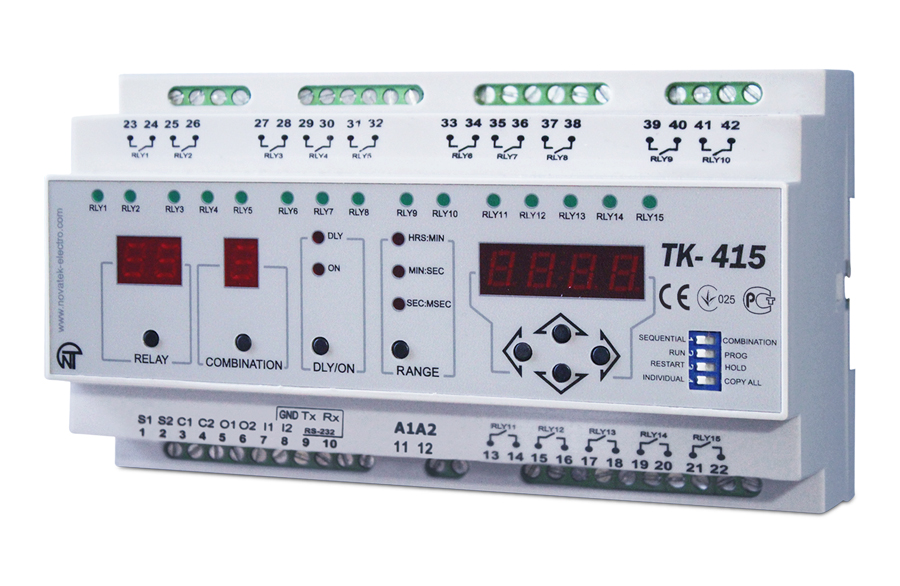
The TK-415 isn't just another timer relay—it's a microprocessor-controlled automation workhorse that operates in two distinct modes within a single device. Whether you need sequential output staging or independent multi-channel timing, this DIN-rail mounted controller delivers precision timing with RS-232 communication capabilities.
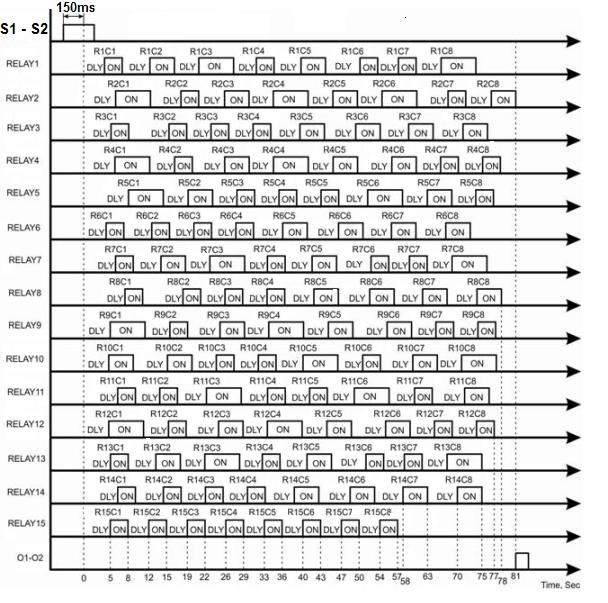
Understanding the Dual-Mode Architecture
How to choose the right Sequential & Combination Timers for your application.
The TK-415's microprocessor core enables two fundamentally different timing architectures through software configuration:
Sequential Mode: Programmed Output Staging
In sequential mode, the TK-415 activates its 15 SPDT relay outputs in a predetermined order. Each output can be programmed with individual ON and OFF delays, creating precise timing sequences. This mode excels in applications where process steps must occur in a specific order—like CIP cleaning cycles where rinse → detergent wash → acid wash → final rinse must happen sequentially.
The sequential timing control uses internal memory to store up to 15 different timing combinations, with each relay output capable of handling 10A switching current. The microprocessor continuously monitors the sequence progression, ensuring fail-safe operation even during power fluctuations within the 85-270V AC operating range.
Combination Mode: Independent Multi-Channel Control
Switching to combination mode transforms the TK-415 into 15 independent timer channels, each programmable with up to 8 distinct timing steps. This creates unprecedented flexibility for complex batch processes where multiple operations run simultaneously but independently.
Each channel operates with its own timing algorithm, allowing precise control of mixing speeds, heating cycles, valve operations, and conveyor sequences—all from a single device. The 7-segment LED display provides real-time feedback on channel status and remaining time values.
Circuit Design and Protection Features
The TK-415's internal circuitry centers around a robust microprocessor with non-volatile memory storage. Input conditioning circuits provide wide voltage tolerance (85-270V AC, 50/60Hz), while output stages feature potential-free SPDT contacts rated for 10A resistive loads.
Key Circuit Protection Elements:
- Input Surge Protection: Metal oxide varistors protect against voltage spikes up to 2.5kV
- Output Contact Protection: RC snubber circuits extend relay life when switching inductive loads
- Memory Backup: EEPROM storage retains programming during power outages
- EMI Filtering: Built-in filters ensure CE compliance in industrial environments
Technical Specifications and Performance Parameters
| Parameter | TK-415 Specification | Operating Range |
|---|---|---|
| Supply Voltage | AC 85-270V, 50/60Hz | ±15% voltage tolerance |
| Output Channels | 15 x SPDT Relays | 10A @ 250V AC resistive |
| Operating Modes | Sequential + Combination | User-selectable via front panel |
| Programming Steps | Up to 8 per channel | Individual ON/OFF timing |
| Communication | RS-232 Serial | PC programming software |
| Mounting | DIN-rail 35mm | Standard industrial panels |
Real-World Application Engineering
Pharmaceutical Batch Control (Baddi Case Study)
At Himalaya Pharmaceuticals, the TK-415 manages their tablet coating process through 12 precisely timed stages. Sequential mode controls the main process flow: preheating (5 min) → coating solution spray (15 min) → intermediate drying (8 min) → final curing (12 min). Meanwhile, combination mode independently controls auxiliary systems like exhaust fans, solution pumps, and temperature controllers.
The RS-232 interface enables recipe downloading from their quality management system, ensuring batch-to-batch consistency while maintaining FDA compliance documentation.
Conveyor Sequencing in Automotive (Chennai)
Mahindra's transmission assembly line in Chennai uses TK-415 units to sequence 15 conveyor sections with precise inter-conveyor delays. This prevents product jamming while maintaining optimal throughput. Each conveyor section operates independently, but the sequential timing ensures smooth product flow through the entire assembly process.
Quick Selection Guide
| Application Type | Recommended Mode | Price (Ex-GST) |
|---|---|---|
| Sequential Process Control | TK-415 Sequential Mode | ₹7,500 |
| Multi-Channel Independent Timing | TK-415 Combination Mode | ₹7,500 |
| Complex Batch Automation | TK-415 Dual-Mode | ₹7,500 |
Programming and Configuration
Front Panel Programming
The TK-415's intuitive front panel eliminates the need for external programming devices in most applications. The SEQ/COMB switch selects operating mode, while dedicated buttons for RELAY, COMBINATION, DLY/ON, and RANGE enable complete parameter setting.
Time ranges span from 0.1 seconds to 999 hours, accommodating everything from rapid packaging sequences to extended curing cycles. The 7-segment display provides immediate feedback during programming and operation.
RS-232 Communication Protocol
For advanced applications, the RS-232 interface supports remote programming and monitoring. The communication protocol allows:
- Recipe upload/download for batch consistency
- Real-time monitoring of channel status
- Integration with SCADA systems
- Centralized timing parameter management
Installation and Wiring Best Practices
Power Supply Considerations
Install a dedicated 5A MCB for TK-415 power supply, separate from load circuits. Use 1.5mm² copper conductors for supply connections, with proper earth grounding to the DIN rail mounting bracket.
Output Wiring Guidelines
Each SPDT output handles 10A resistive loads, but derate to 60% for inductive loads like contactors and solenoids. Install RC suppressor networks (0.1µF + 100Ω) across inductive load terminals to extend relay contact life.
For loads exceeding 10A, use the TK-415 outputs to control intermediate contactors. This approach provides unlimited load switching capability while protecting the timer's internal relays.
EMI Protection
Mount the TK-415 away from variable frequency drives and switching power supplies. Use shielded cables for RS-232 connections, with shield grounding at the TK-415 end only to prevent ground loops.
Troubleshooting and Maintenance
Common Issues and Solutions
Display Showing Error Codes: Check supply voltage stability. Voltage fluctuations below 85V or above 270V trigger protection modes. Install a voltage stabilizer if local supply is unstable.
Outputs Not Switching: Verify programming mode matches application requirements. Sequential mode won't activate multiple outputs simultaneously—switch to combination mode for independent channel operation.
Communication Failures: RS-232 issues typically stem from incorrect baud rate settings or cable wiring errors. Use standard null-modem cables with pins 2-3 crossed and pin 5 common.
Preventive Maintenance
Annual maintenance should include contact resistance measurement across each relay output. Resistance above 50mΩ indicates contact wear requiring replacement. Clean the front panel with isopropyl alcohol, avoiding harsh solvents that may damage the polycarbonate housing.
Cost-Benefit Analysis: TK-415 vs. PLC Solutions
Traditional PLC-based timing solutions for similar applications cost ₹1.5-3.0 lakhs including programming software and I/O modules. The TK-415 delivers equivalent functionality at ₹7,500, representing 95% cost savings while simplifying installation and maintenance.
Programming time drops from weeks (PLC ladder logic) to hours (front panel configuration), reducing commissioning costs and enabling faster production line modifications.
Why Choose Novatek Electro for Process Automation?
- ISO 9001:2015 Certified Quality: Rigorous quality management ensures consistent product performance
- CE Compliance: European safety standards met for global market acceptance
- 30+ Years Manufacturing Excellence: Three decades of electrical protection device expertise
- Made in India: Local manufacturing ensures quick delivery and competitive pricing
- Comprehensive After-Sales Support: Technical support, spare parts, and field service across India
Frequently Asked Questions
Ready to Upgrade Your Process Control?
The TK-415 Sequential & Combination Timer delivers dual-mode flexibility that traditional timing relays can't match. At ₹7,500, it's the cost-effective alternative to expensive PLC solutions for batch process automation.
Order now: Visit intelli-electro.com or contact our technical team at sales@novatek-electro.in | +91-7840054744
Our application engineers provide free consultation for optimal timer selection and system integration support.